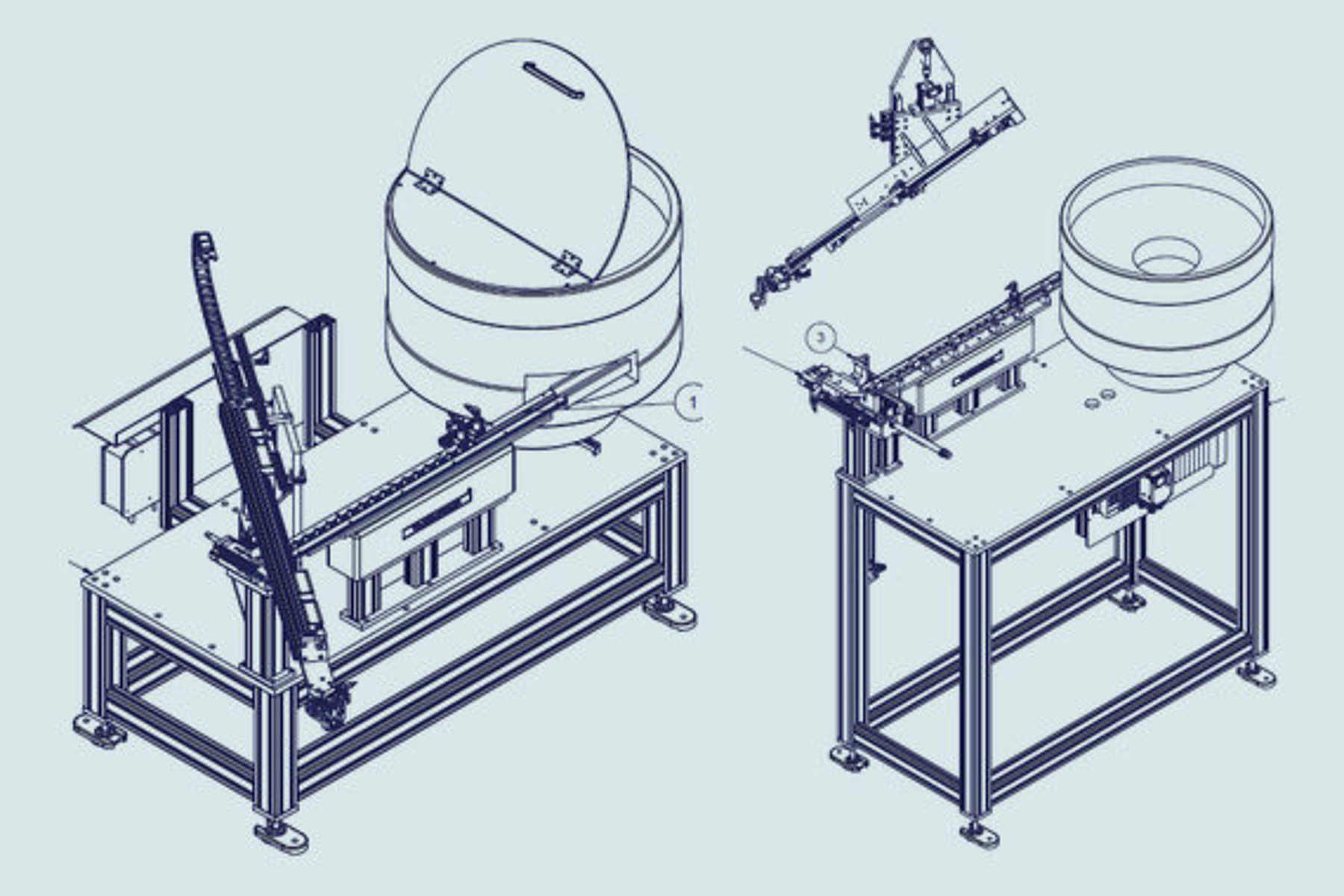
Whether you need simple part feeding or the precise transfer and placement of your workpieces, we provide everything from a single source. From stationary end-of-arm tooling and singulation systems to complete pick-and-place handling solutions, all systems are designed and manufactured in-house to ensure reliable, process-safe operation.
The hexagonal flange weld nuts are stored and correctly oriented in an OA45 sorting unit. The workpieces are then buffered on an FS61 linear conveyor and transported for singulation. The first workpiece in the buffer section is pneumatically separated and positioned for transfer to the customer's system.
The complete solution includes motion monitoring and part detection systems, all wired to a BUS module.
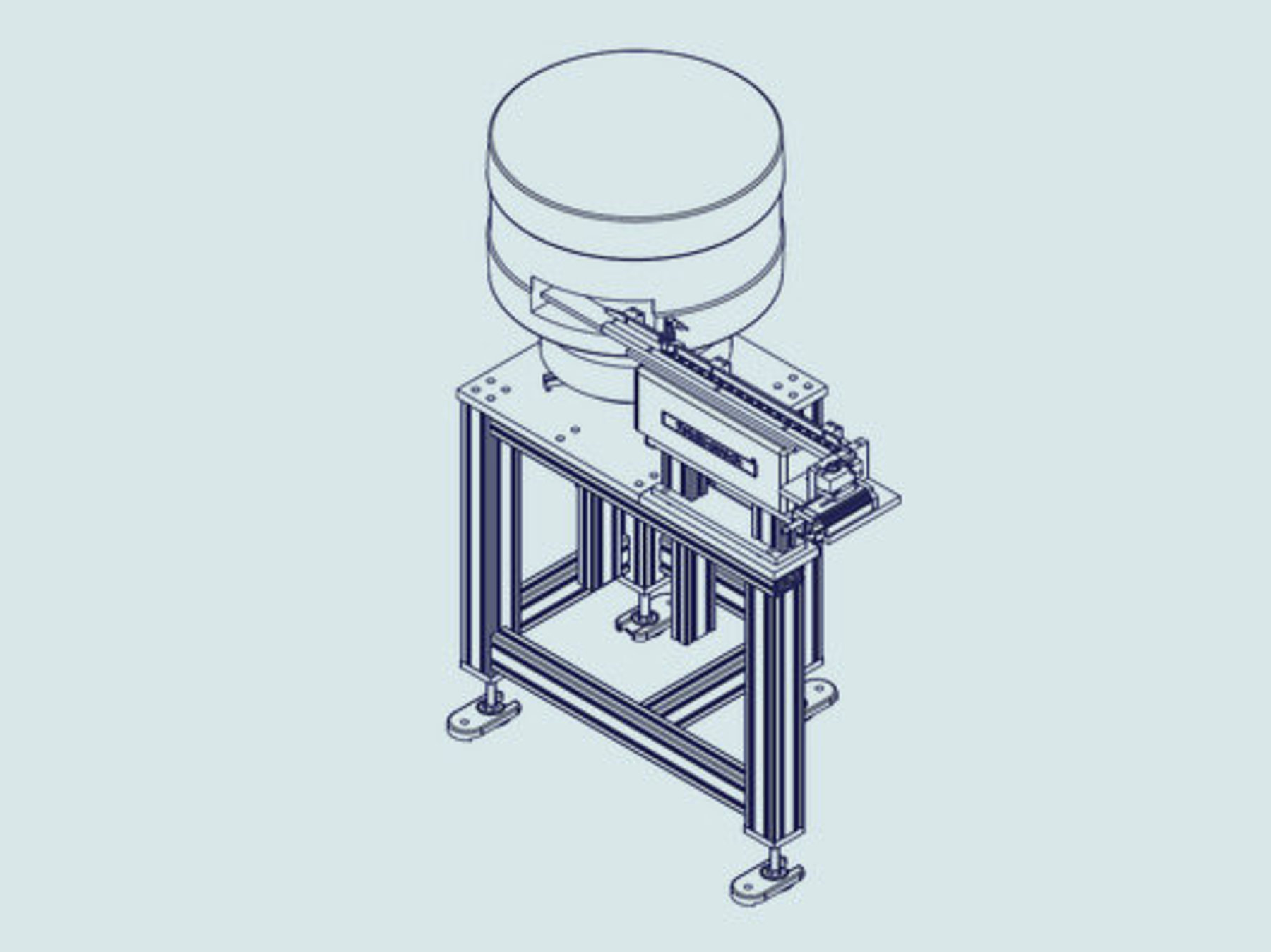
Due to the geometry of the sheet metal formed parts, precise orientation and transfer to the robot can only be achieved through an additional alignment step. The design of the robot gripper required an additional clearance stroke to ensure reliable part positioning and availability.
The complete solution includes motion monitoring and part detection systems, all wired to a valve terminal.
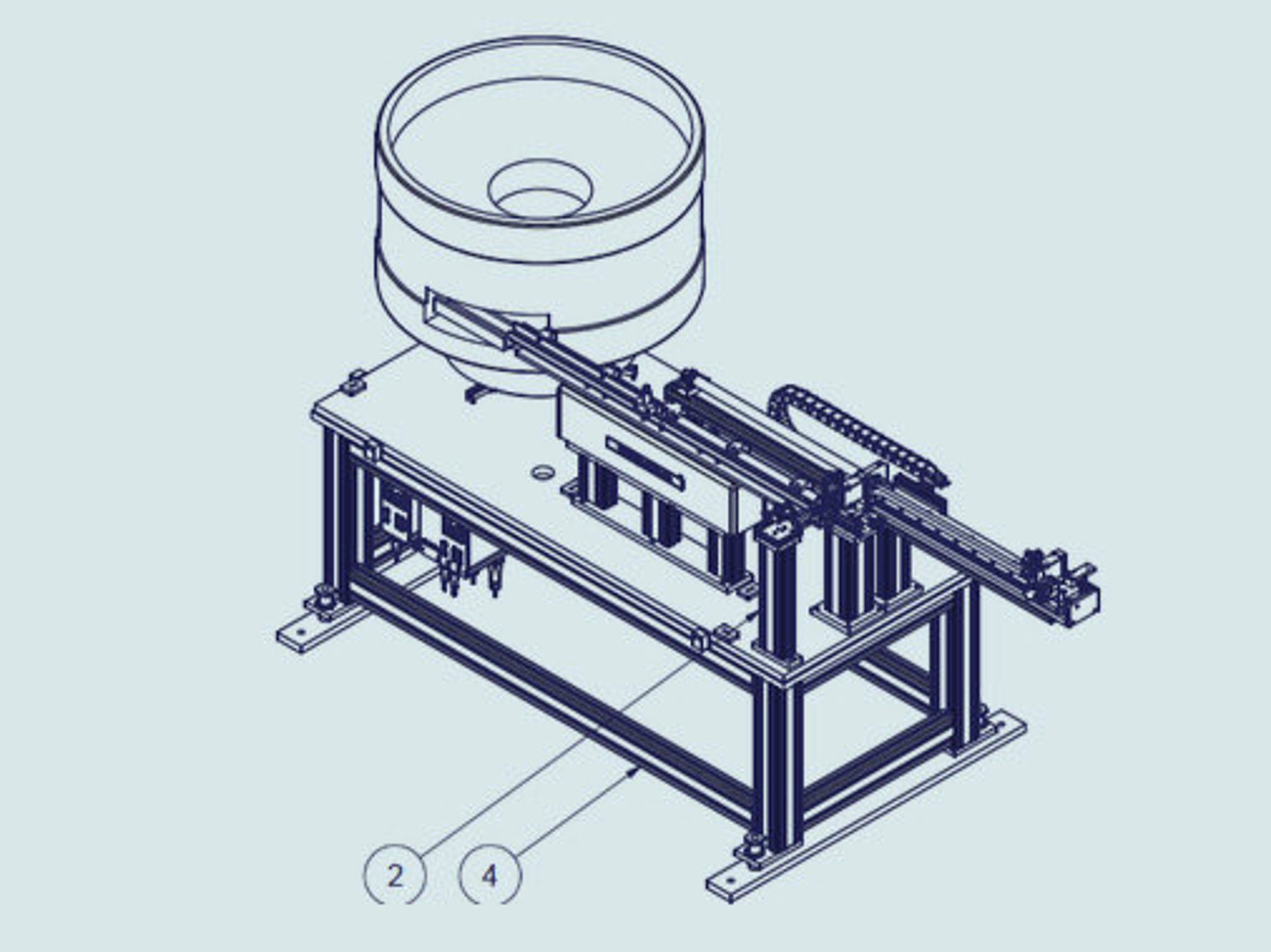
In addition to the primary task of providing door hinges in the correct orientation for robotic pick-up during fully automated door hinge assembly, this feeding system also detects incorrect hinge types and adjusts the opening angle of the hinge.
During the singulation process, various contours of the hinge are checked to identify incorrect parts, which are automatically rejected if necessary. In a further step, the hinge is fully closed and then opened to an adjustable angle in the alignment station.
Due to the size and geometry of the workpieces, the largest feeding unit, type FGH80, was used in combination with a pre-feeding bunker conveyor type BF80/40 and a linear conveyor type FS101. This feeding system was also delivered as a complete solution, including all required motion monitoring and part detection systems, wired to a valve terminal.
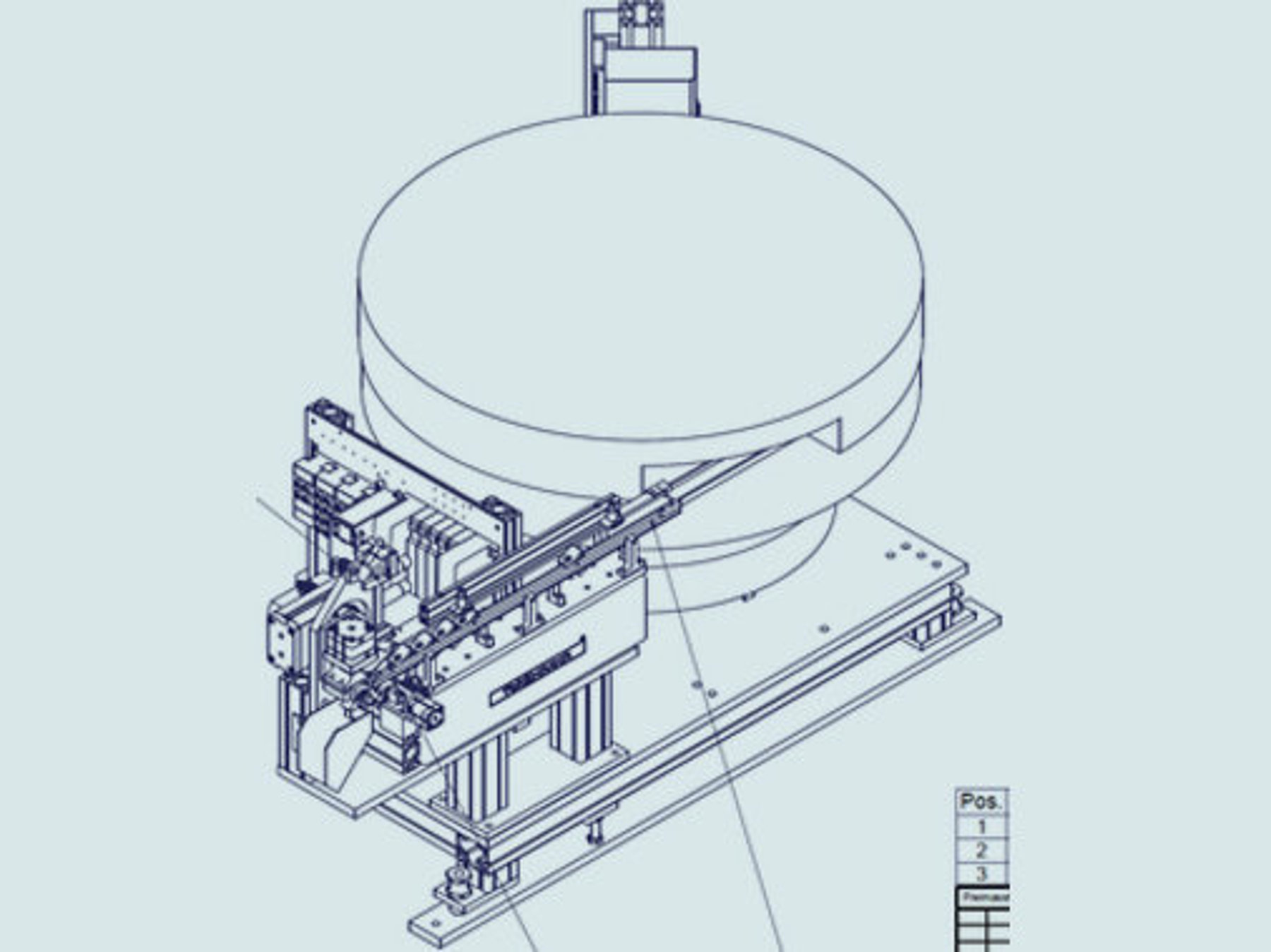
In addition to the primary task of providing tailgate hinges in the correct orientation for robotic pick-up during fully automated tailgate hinge assembly, this feeding system also includes the adjustment of the hinge opening angle. In a first step, the hinge is completely closed and then opened to an adjustable angle in the alignment station.
A further requirement was the simultaneous provision of two hinges for robotic pick-up. Due to the size and geometry of the workpieces, the largest feeding unit, type FGH80, was used in combination with a pre-feeding bunker conveyor type BF80/40 and a linear conveyor type FS101.
This feeding system was also delivered as a complete solution, including all required motion monitoring and part detection systems, wired to a valve terminal.
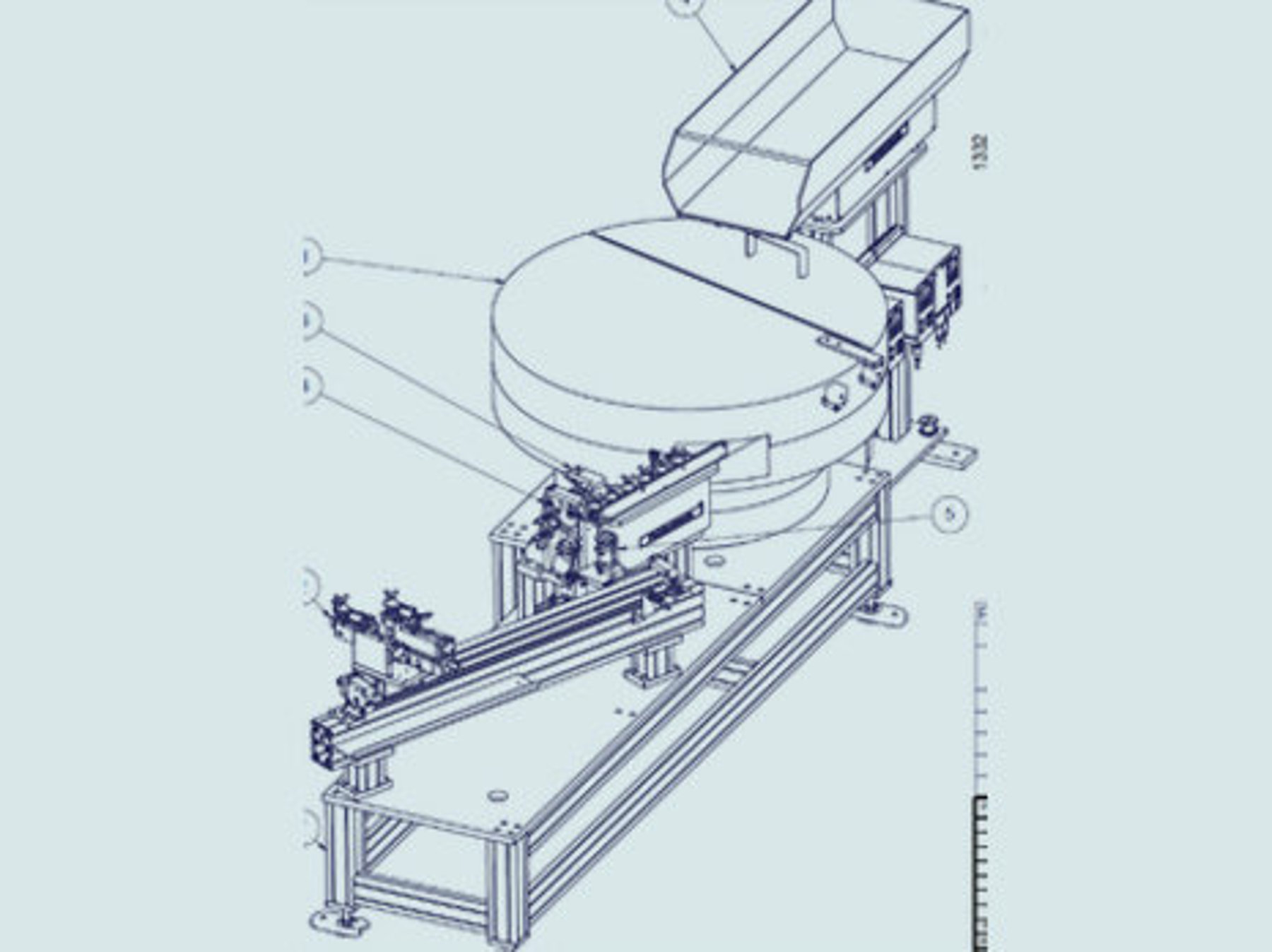
On the FS101 linear conveyor, the workpieces are buffered and transported for singulation. The first workpiece in the buffer section is pneumatically separated to the side. The pneumatic gripper then picks up the separated workpiece and, after a defined vertical and horizontal movement, places it onto the locating pin of the customer's lower electrode.
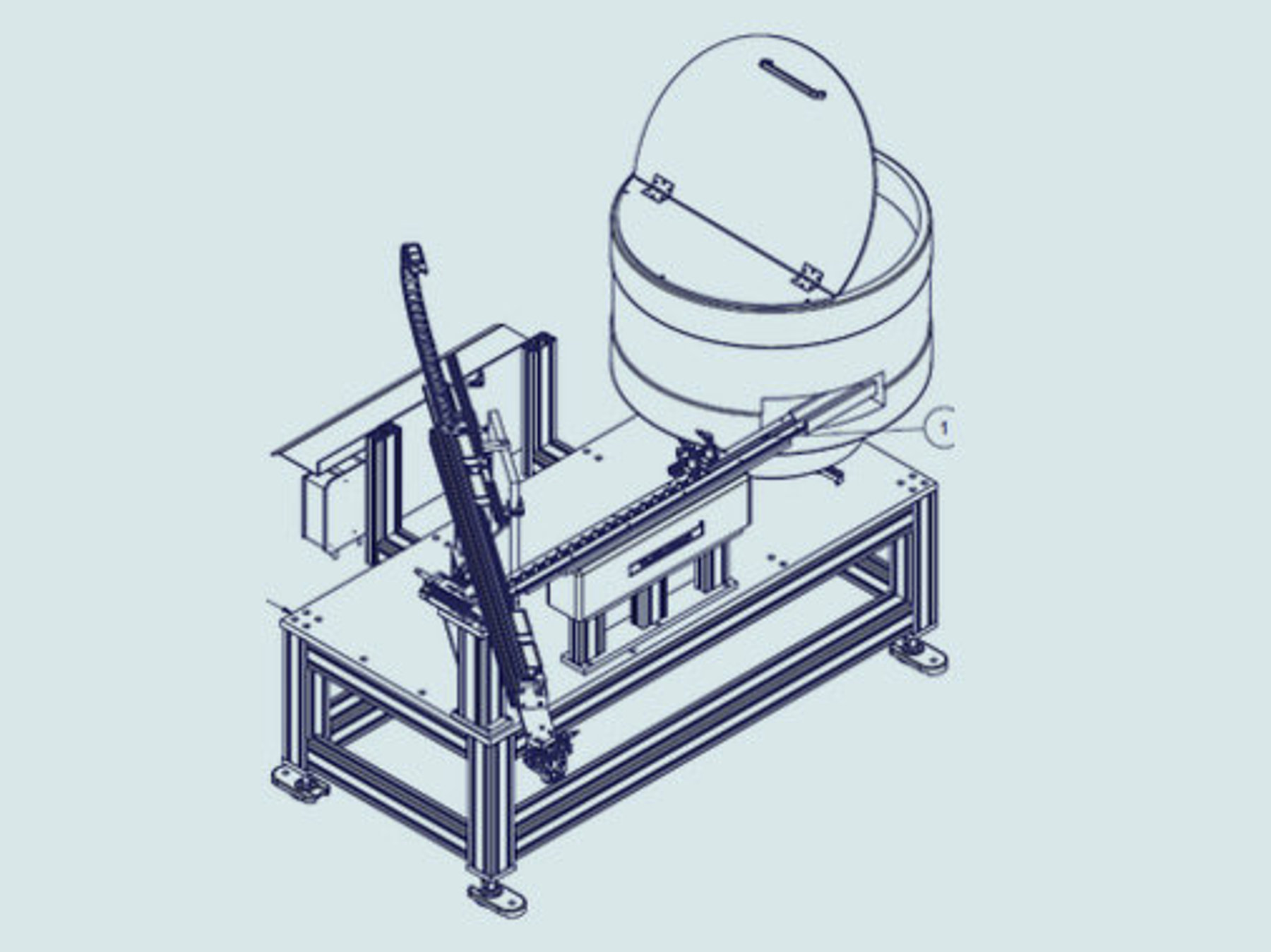
The welding studs are stored and correctly oriented in an OA60 sorting unit. The workpieces are then buffered on the FS101 linear conveyor and transported for singulation. The first workpiece in the buffer section is pneumatically separated to the side and then transferred upwards via a vertical lift to the pneumatic handling unit.
The pneumatic gripper picks up the separated welding stud and, after a defined vertical and horizontal movement, places it into the lower copper electrode of the customer's welding machine.
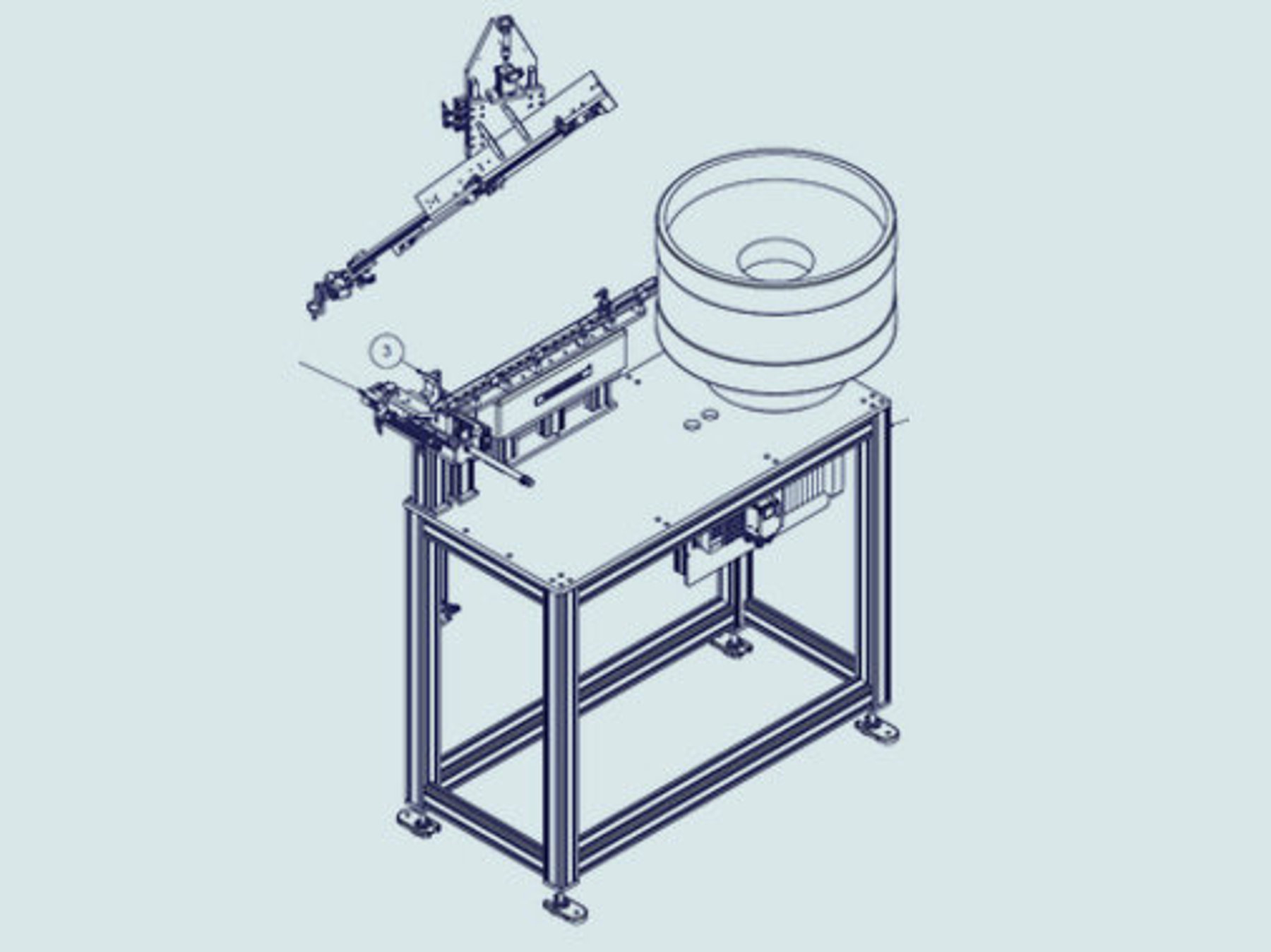
The formed parts are stored, correctly oriented, and singulated in a modified MSV04/E2 nut shooter before being distributed to two transport hoses. At the end of each transport hose, the formed parts are held in a magazine.
The formed parts are then inserted directly from the magazine into the designated mounting point of the left or right vehicle door. In addition, the vehicle door is secured by a swiveling retention device to ensure a reliable and process-safe insertion operation.